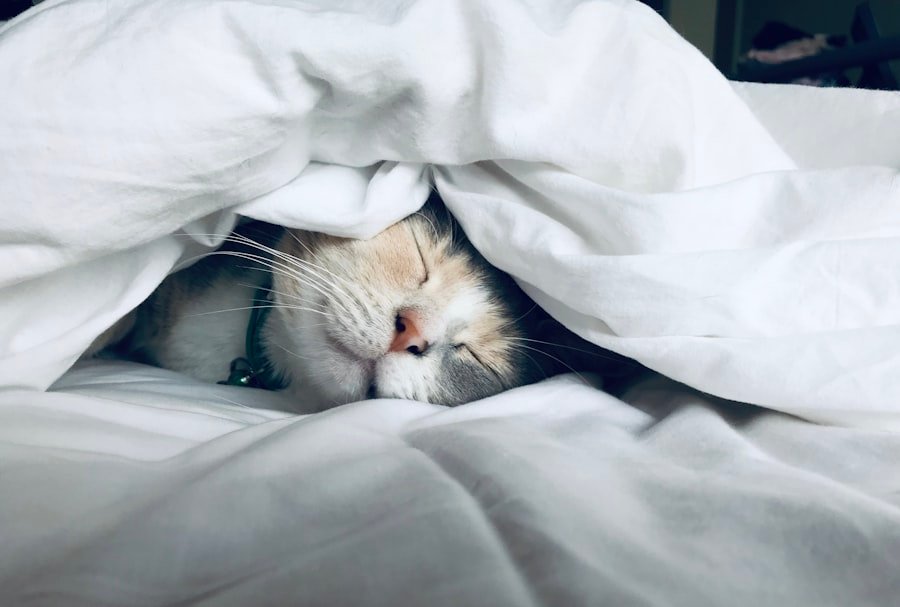
You slept for seven hours. You went to bed at a reasonable time. And yet you woke up exhausted — again. If this sounds familiar, you're not alone: a survey by the Sleep Council found that 74% of UK adults don't feel rested after a typical night's sleep, even when they hit the recommended 7–9 hours.
Sleep science has advanced considerably in the last decade. We now know that total sleep duration is only one factor in sleep quality — and often not the most important one. What matters is what happens during those hours.
What Happens When You Sleep (and Why It Goes Wrong)
Sleep occurs in approximately 90-minute cycles, each containing light sleep, deep sleep, and REM (rapid eye movement) sleep. Deep sleep is when physical restoration occurs — tissue repair, immune function, memory consolidation. REM sleep supports emotional processing and creativity.
The problem is that many modern lifestyle factors — from evening alcohol to bedroom temperature to blue light exposure — directly interfere with deep sleep and REM without necessarily reducing total sleep time. You may clock eight hours and still experience almost no restorative sleep.
7 Evidence-Based Fixes That Actually Work
Fix 1: Stop Drinking Alcohol Within 3 Hours of Sleep
This is the single most impactful change for most people. Alcohol is a sedative, which is why it helps you fall asleep — but it dramatically suppresses REM sleep in the second half of the night, and causes "rebound arousal" that fragments sleep as it metabolises. Even two units within three hours of bedtime measurably degrades sleep quality. Studies using sleep trackers show that a single glass of wine reduces sleep quality scores by an average of 9.3%.
✅ What Helps Sleep
- Cool bedroom (16–19°C / 61–66°F)
- Consistent wake time (even weekends)
- Morning bright light exposure
- Magnesium glycinate supplement
- No screens 30 min before bed
- Exercise (not within 2 hours of sleep)
❌ What Hurts Sleep
- Alcohol within 3 hours of bedtime
- Irregular sleep schedule
- Bedroom temperatures above 20°C
- Caffeine after 2pm
- Sleeping in on weekends (disrupts rhythm)
- Late-night heavy meals
Fix 2: Set a Consistent Wake Time — Not Bedtime
Sleep researchers consistently find that a fixed wake time is more important than a fixed bedtime for regulating the circadian rhythm. Your body anchors its sleep drive to when you wake up, not when you go to bed. Sleeping in on weekends — even by 90 minutes — is enough to cause "social jetlag" that disrupts the following week's sleep.
Fix 3: Get Bright Light in Your Eyes Within 30 Minutes of Waking
This is perhaps the most underrated intervention in sleep science. The suprachiasmatic nucleus — the brain's master clock — uses light to set your circadian rhythm. Morning bright light (ideally outdoor sunlight, or a 10,000 lux light therapy lamp in UK winters) signals to your body that the day has started, anchoring both alertness and — crucially — the release of melatonin 14–16 hours later.
Fix 4: Avoid Caffeine After 2pm
Caffeine has a half-life of 5–7 hours. A coffee at 3pm still has half its caffeine active in your bloodstream at 9pm. More importantly, caffeine blocks adenosine receptors — and adenosine is the chemical that builds up during the day to create sleep pressure. Blocking it doesn't mean you don't need sleep; it means you mask the pressure until the caffeine clears, then it hits all at once.
Magnesium glycinate is one of the few sleep supplements with genuine clinical evidence behind it. Boots carries several well-reviewed formulas — starting from under £10.
Shop Magnesium Supplements at Boots →Fix 5: Keep Your Bedroom Below 19°C
Core body temperature must drop by about 1°C to initiate sleep, and continues falling through the night during deep sleep. Warm bedrooms — common in UK homes in winter — prevent this temperature drop and dramatically reduce deep sleep. Most people sleep significantly better at 17–19°C than at 21°C, even if the cooler temperature feels uncomfortable at first.
Fix 6: Consider Magnesium Glycinate
Of the many supplements marketed for sleep, magnesium glycinate has the strongest evidence base. Magnesium plays a role in the GABA neurotransmitter system, which promotes relaxation, and deficiency is extremely common in UK adults. Several double-blind trials show that 300–400mg of magnesium glycinate taken 30–60 minutes before bed measurably improves deep sleep and reduces night-time waking.
Fix 7: If You Can't Sleep, Get Up
One of the most counterintuitive but effective sleep interventions: if you've been lying awake for more than 20 minutes, get up and do something calm in dim light until you feel sleepy. Staying in bed while awake creates an association between your bed and wakefulness — the opposite of what you need. This principle, called stimulus control, is a core component of CBT-I (Cognitive Behavioural Therapy for Insomnia), which outperforms sleep medication in long-term trials.
Struggling with a warm bedroom? A smart thermostat or a cooling mattress pad could make a measurable difference. Explore the range at Amazon UK — with next-day delivery on most items.
Shop Sleep Products on Amazon UK →"The question isn't how long you're sleeping. It's how much of that sleep is actually restorative. Most sleep problems are architecture problems, not duration problems." — Dr Matthew Walker, University of California, Berkeley
Evidence-Based Sleep Supplements — Available in the UK
From magnesium glycinate to sleep-support blends — find the right supplement at trusted UK retailers with next-day delivery.
Affiliate link — HelpSurf may earn a small commission if you purchase via this link, at no extra cost to you.
When to See a Doctor
If you've tried the above consistently for 4–6 weeks and still feel unrefreshed, it's worth speaking to your GP. Conditions including sleep apnoea (obstructed breathing during sleep), restless leg syndrome, thyroid dysfunction, and iron deficiency can all cause persistent tiredness that lifestyle changes alone cannot fix.